You may know something, but have you truly learned it?
In today’s information-saturated world, the lines between knowing, learning, understanding, and studying often blur. We can recall facts with a quick Google search or repeat what we’ve heard in class, but real learning is much deeper. In this post, we’ll explore the difference between knowing and learning, how understanding fits into the picture, and why effective studying matters more than ever. If you’re a student or lifelong learner seeking real growth, this article will give you the clarity and tools you need.
Step 1: Define the Core Concepts
Let’s start by defining the keywords clearly.
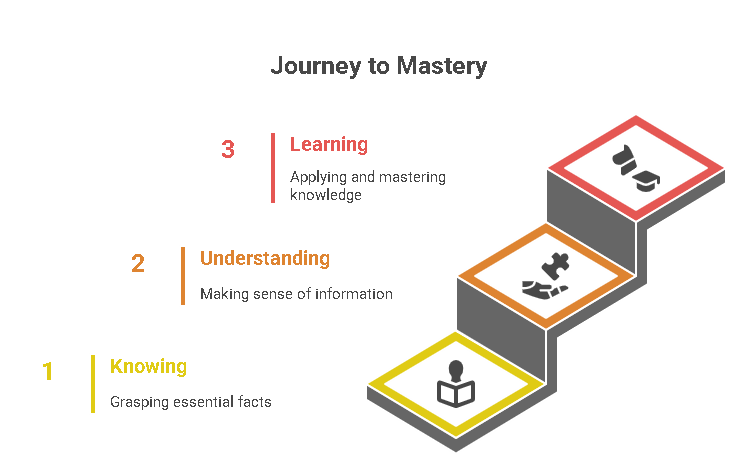
- Knowing is awareness of facts. For example, knowing that water boils at 100°C.
- Learning is internalizing and applying knowledge. You not only remember that water boils at 100°C, but you understand how that applies to making tea at higher altitudes.
- Understanding is the bridge between the two. It connects raw facts to practical application.
- Studying is the process through which knowing becomes learning.
Step 2: The “Illusion of Knowledge”
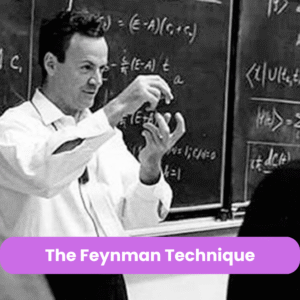
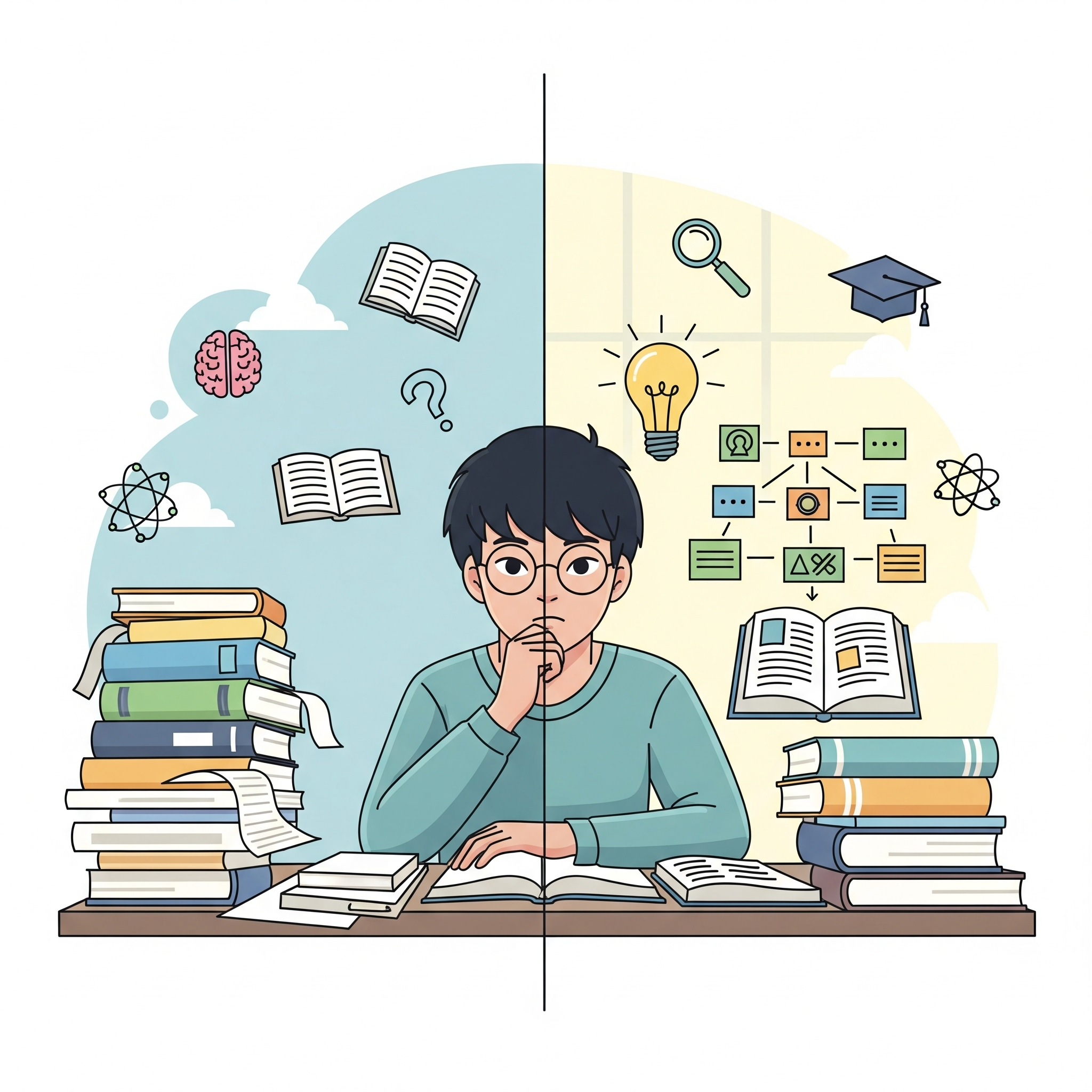
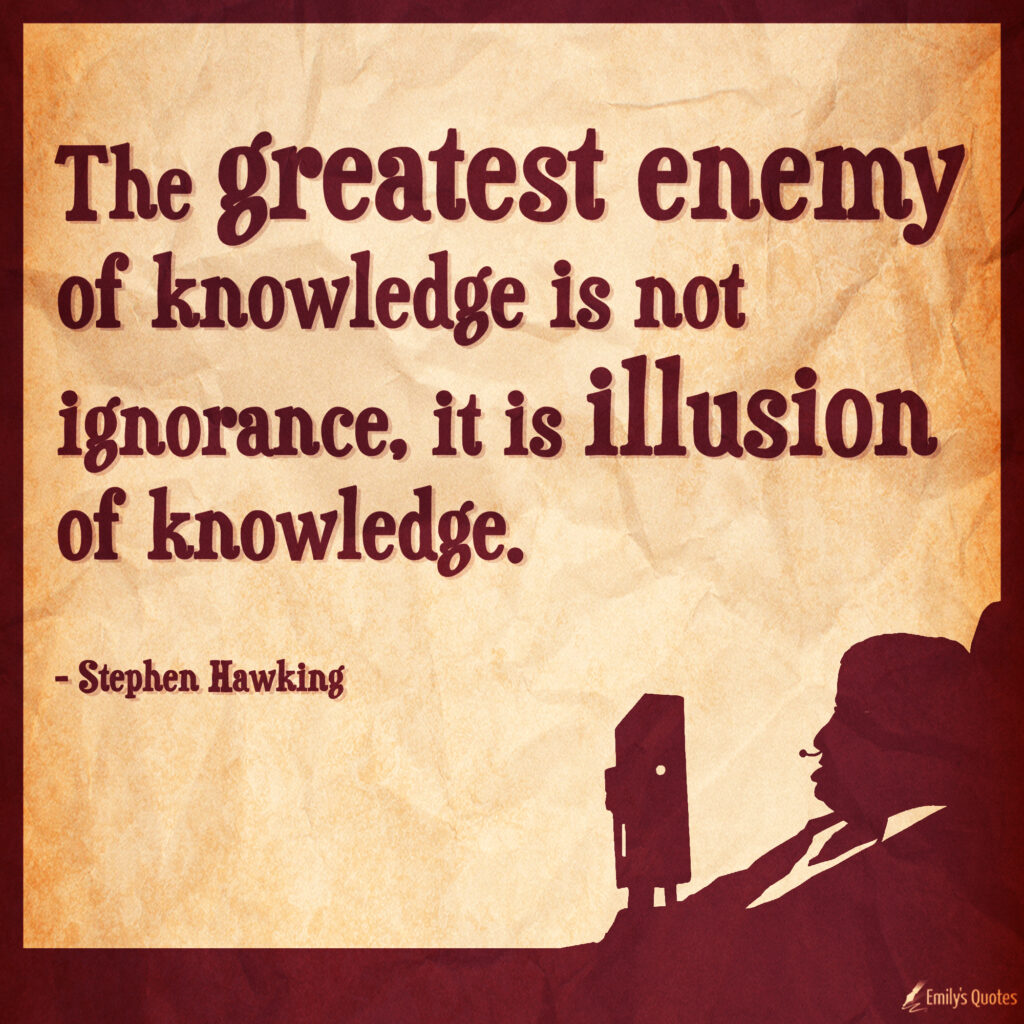
One of the biggest pitfalls of modern education is the illusion of knowledge. Reading a chapter and recognizing terms gives a false sense of competence. You might know definitions, but if you can’t explain the concept in your own words (The Feynman Technique) or apply it to a real-world scenario, you haven’t truly learned it.
Example: You might know Newton’s Third Law from a textbook. But only when you explain it using a tug-of-war game or a balloon rocket experiment, do you prove understanding and demonstrate learning.
Step 3: Active Learning vs Passive Knowing
Passive Knowing:
- Watching a video
- Listening to a lecture
- Reading a book without engagement
Active Learning:
- Summarizing content in your own words
- Teaching others (Feynman Technique)
- Applying the idea in practice
Practical Tip: After every study session, ask yourself: “Could I teach this to someone else without notes?”
Step 4: Strategies to Convert Knowing Into Learning
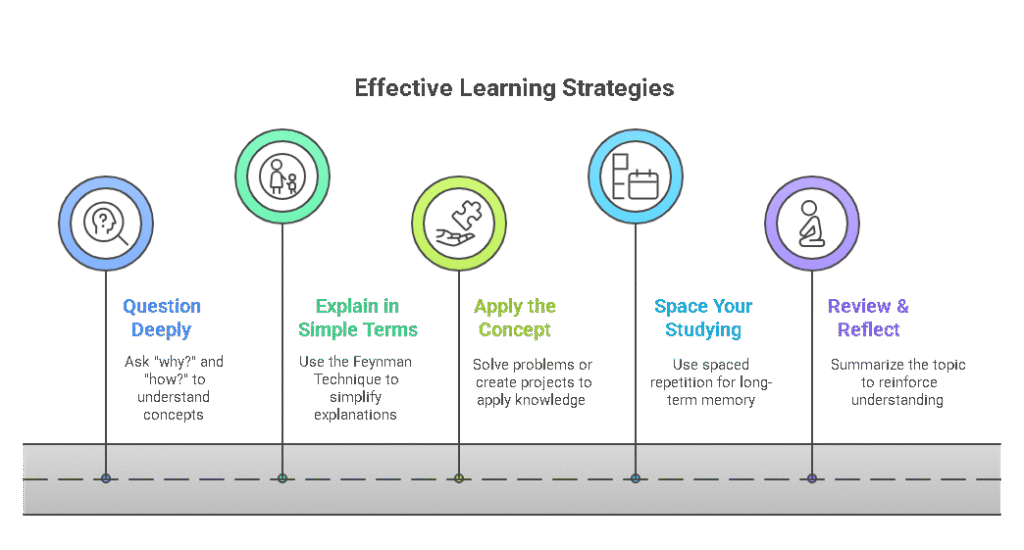
Here’s a step-by-step approach to transform surface-level knowing into deep learning:
- Question Deeply: Instead of memorizing, ask “why?” and “how?”
- Explain in Simple Terms: Use the Feynman Technique—teach the concept as if to a 6-year-old.
- Apply the Concept: Solve problems or create projects related to the topic.
- Space Your Studying: Use spaced repetition to move knowledge to long-term memory.
- Review & Reflect: Summarize the topic after a few days to reinforce understanding.
Example: Don’t just study photosynthesis. Grow a plant, observe light exposure, and connect textbook theory with hands-on experience.
Step 5: The Role of Understanding in Mastery
Understanding isn’t just about getting things “right.” It’s about seeing connections. When you understand a concept:
- You can transfer it to different scenarios
- You can troubleshoot when things go wrong
- You become a flexible thinker
Recommended Resource:
- “Make It Stick: The Science of Successful Learning” by Peter C. Brown
- Link: Make It Stick on Amazon
Step 6: Rewiring Study Habits for Real Learning
To move from passive knowing to active learning, upgrade your study routine:
| Traditional Study Habit | Smart Learning Upgrade |
|---|---|
| Re-reading notes | Self-quizzing using flashcards |
| Highlighting text | Summarizing in your own words |
| Last-minute cramming | Spaced repetition scheduling |
The difference between knowing and learning is the difference between short-term memory and long-term mastery. While knowing gives you facts, learning transforms you by enabling application, analysis, and adaptability. By improving your studying habits and focusing on deeper understanding, you elevate your skills in any subject. Whether you’re preparing for exams or upskilling for your career, mastering this difference is crucial.
Remember, studying isn’t just about remembering — it’s about understanding and learning for life.